AI/ML, Full-Stack2025Featured

ETPS - Enterprise-Grade Talent Positioning System

ETPS - Enterprise-Grade Talent Positioning System
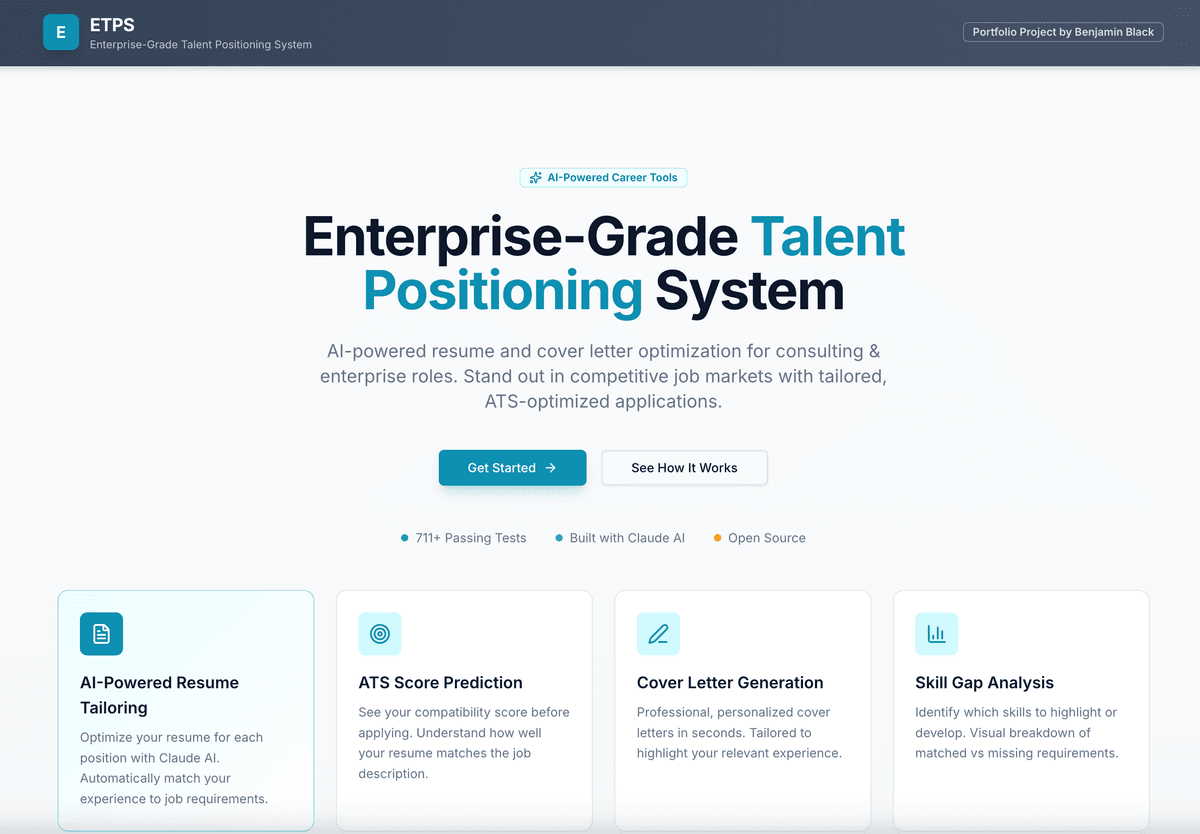
ETPS (Enterprise-Grade Talent Positioning System) is a production-ready, open-source AI orchestration platform that automates resume tailoring, cover letter generation, and skill gap analysis for job applications.

Built with FastAPI, Next.js, Claude, and Qdrant, the system features:
- Multi-Agent Orchestration: Coordinates specialized AI agents (Parser, Skill Gap Analyzer, Resume Tailor, Cover Letter Generator, Critic) for high-quality output
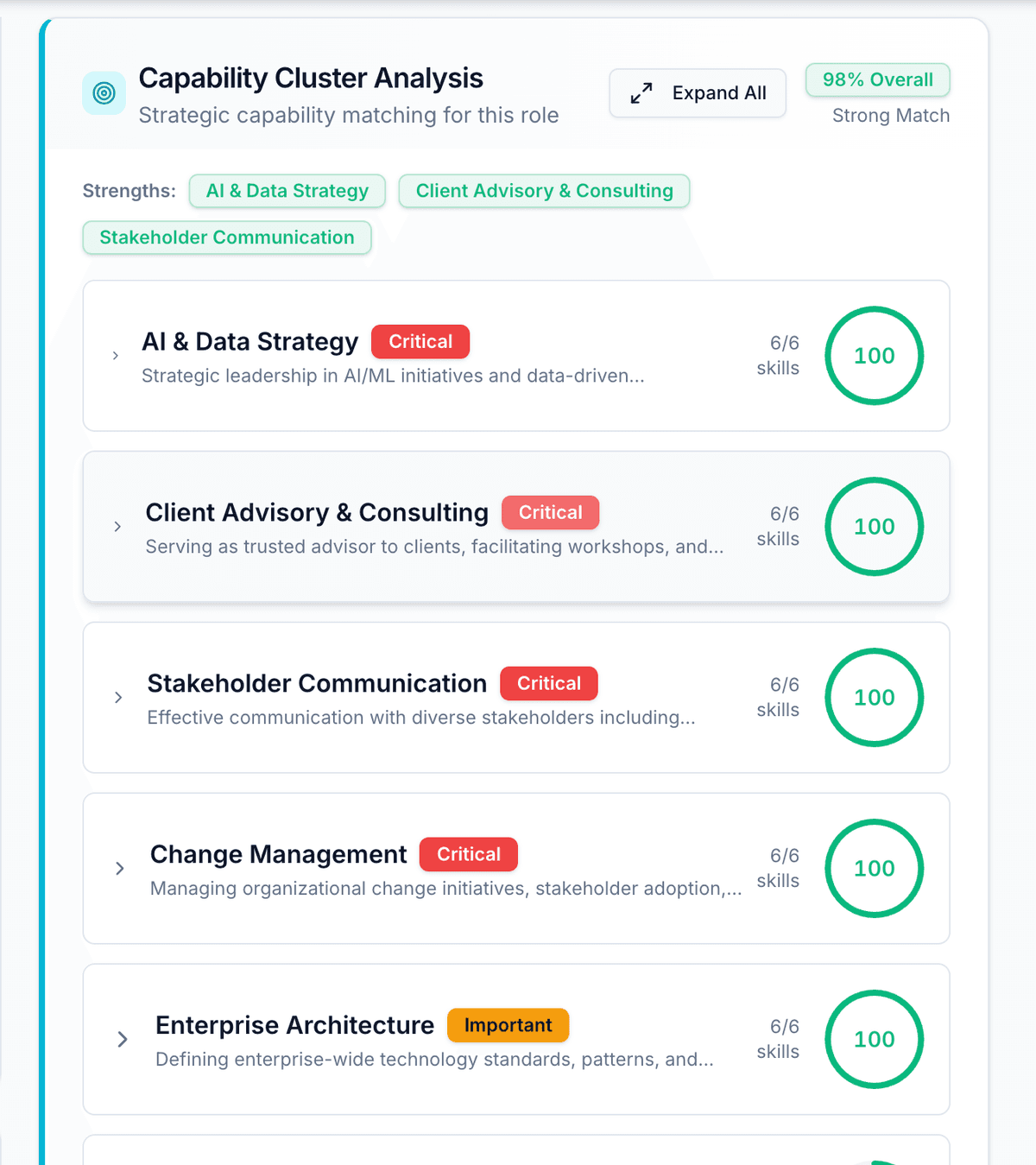
- Semantic Skill Matching: Uses vector embeddings and Qdrant to match candidate experience against job requirements with capability clustering
- Quality Evaluation Loop: Critic agent evaluates ATS compatibility, style adherence, and truthfulness with scoring and iterative refinement
- Company Intelligence: Extracts company profiles from job descriptions including industry, size, culture, and AI maturity
- Professional Formatting: Preserves .docx formatting while tailoring content, ensuring ATS-friendly layouts
- Production Deployment: Full cloud deployment with Railway (backend), Vercel (frontend), PostgreSQL, and Qdrant Cloud
- Comprehensive Testing: 789+ passing tests with MockLLM for cost-effective test automation

The system demonstrates enterprise-grade AI architecture with security hardening (CORS, rate limiting, SSRF prevention) and extensive documentation.

Business Case

Senior professionals applying for competitive roles spend 2-4 hours per application manually tailoring resumes and writing cover letters. This process is time-consuming, inconsistent, and limits the number of quality applications a candidate can submit.

ETPS addresses these challenges through AI-powered automation with human oversight, reducing application time from hours to minutes while improving quality and consistency.

Key Business Value:
- Time Savings: Reduces resume + cover letter creation from 2-4 hours to under 5 minutes
- Quality Assurance: Critic agent enforces ATS compatibility, style consistency, and truthfulness
- Strategic Positioning: Skill gap analysis identifies missing requirements and suggests positioning strategies
- Scalability: Enables professionals to apply to more opportunities with consistently high-quality materials
- Data-Driven: Semantic search ensures the most relevant experience is highlighted for each role

Who Should Use This?

Senior Professionals: Experienced professionals (directors, VPs, principals) applying for strategic roles who need to efficiently tailor application materials.

Career Transitioners: Professionals pivoting to new industries or roles who need help repositioning their experience effectively.

High-Volume Job Seekers: Candidates applying to multiple positions who need to maintain quality at scale.

AI/ML Engineers: Technical professionals evaluating multi-agent AI architectures and LLM orchestration patterns for learning purposes.

Tech Leaders: CTOs and engineering managers who want to see production-quality AI systems design with comprehensive testing.

Technologies Used

PythonFastAPINext.jsTypeScriptPostgreSQLQdrantClaudeGPT-4oOpenAI EmbeddingsSQLAlchemyPydanticTailwind CSSshadcn/uiRailwayVercel

Challenges & Solutions

Vector Search Performance: Initial in-memory vector storage didn't scale beyond a few hundred bullets. Solution: Migrated to Qdrant with proper indexing, enabling semantic search across thousands of bullets in under 100ms.

ATS-Compatible Formatting: Preserving complex .docx formatting while modifying content was challenging. Solution: Implemented layout-aware rewriting that identifies editable regions and uses pagination simulation to prevent overflow.

LLM Quality Consistency: Initial bullet rewrites varied significantly in quality. Solution: Built a Critic agent with structured evaluation (ATS score, style, truthfulness) and iterative refinement loops, plus 789+ tests to catch regressions.

Security Hardening: Public deployment required addressing SSRF risks, rate limiting, and PII handling. Solution: Implemented URL allow-listing, rate limiting middleware, environment-based CORS, and PII detection with automatic scrubbing.

Test Coverage Without API Costs: Running 789 tests against real LLM APIs would cost hundreds per run. Solution: Built MockLLM service returning deterministic, schema-valid responses with auto-selection based on environment.

Future Buildouts & Next Steps

Hiring Manager Inference (Phase 2): Implement intelligent inference of likely hiring managers from job descriptions and company structure. Surface warm contact paths and networking suggestions.

Warm Contact Identification: Build graph-based contact analysis to identify mutual connections and potential referrers.

Networking Message Generation: Add AI-powered drafting of networking outreach messages with tone matching and personalization.

Application Tracking (Phase 3): Implement full application lifecycle tracking with status updates, interview scheduling, and analytics dashboard.

Multi-User Authentication: Add user accounts with JWT-based auth and tenant isolation for team deployment.

Interview Prep Agent: Extend system to generate interview preparation materials including anticipated questions and STAR-format answers.

Screenshots

ETPS - Enterprise-Grade Talent Positioning System screenshot 1
ETPS - Enterprise-Grade Talent Positioning System screenshot 2
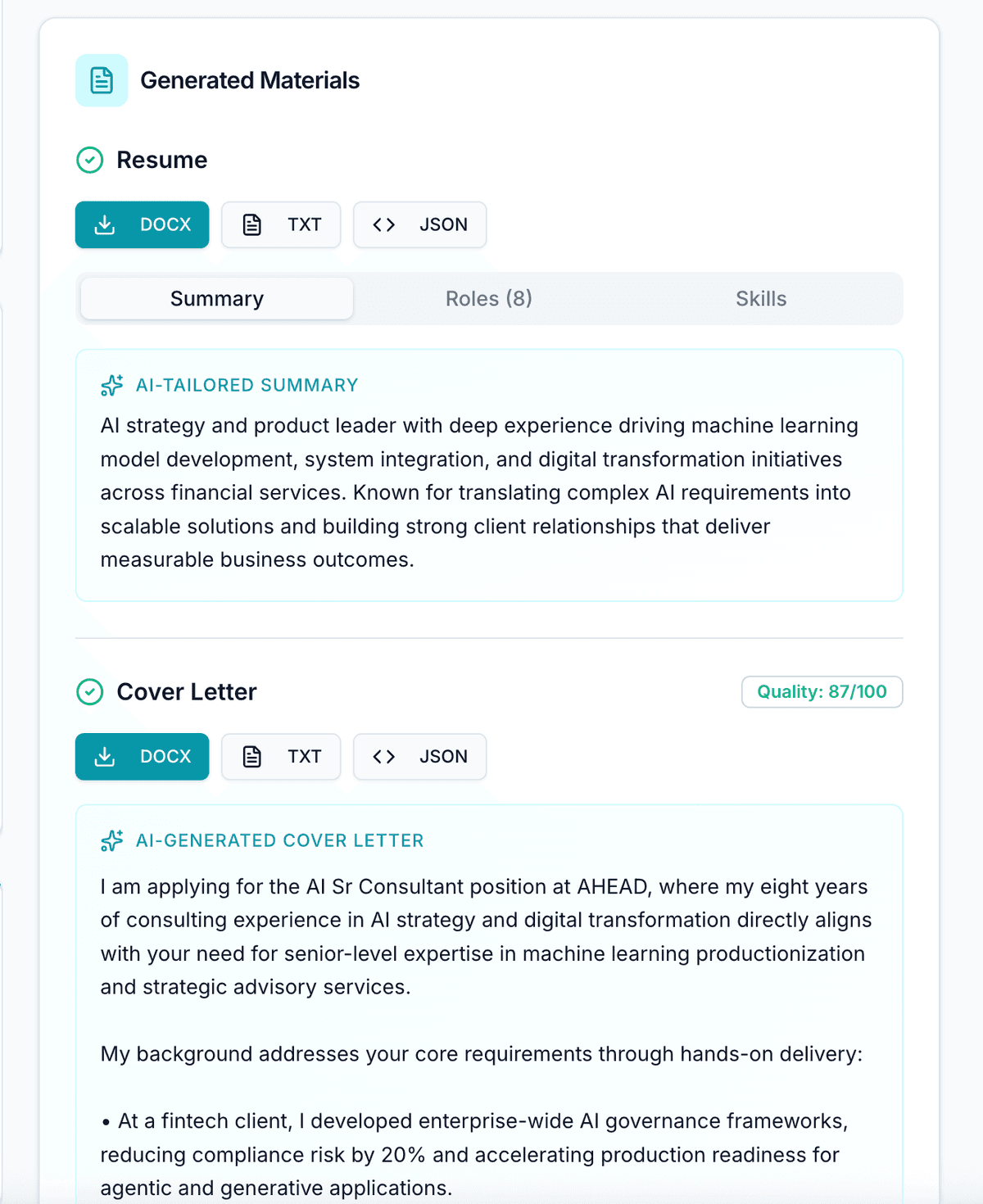
ETPS - Enterprise-Grade Talent Positioning System screenshot 3
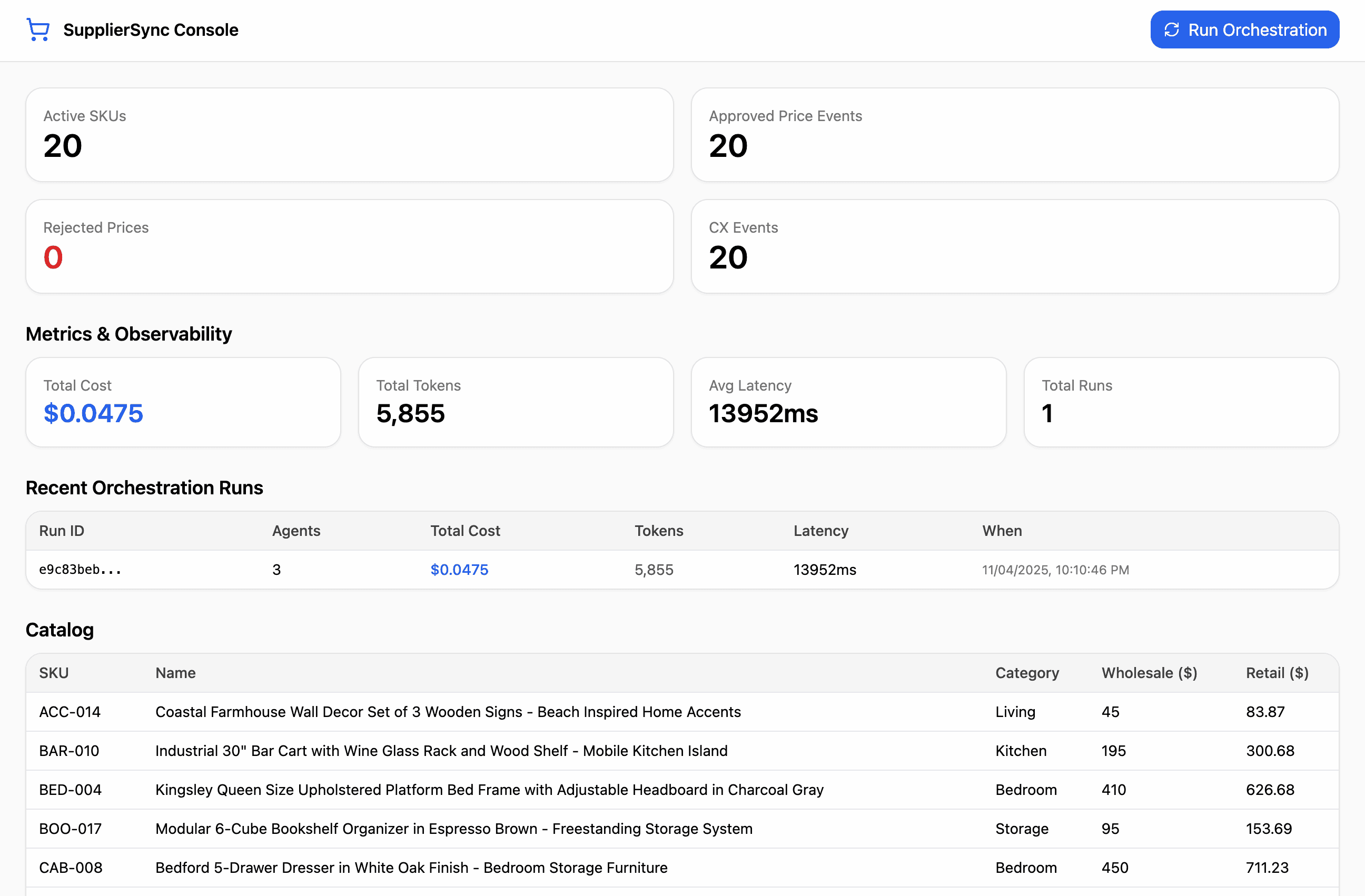
ETPS - Enterprise-Grade Talent Positioning System screenshot 4